I’d like to set the mood.
If you’d like to set the mood too, let me suggest you take this little slice of sultry, gothic theatre-core for a spin, before, during or after this post. Whenever works for you mate, it’s your own time you’re wasting…
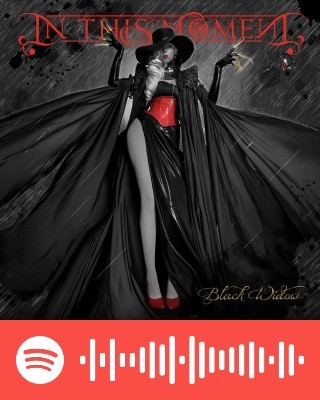
Feeling suitably emo and a little bit witchy now? I hope so, that’s how this song makes me feel. I need to also clarify, I am a woman of science, a woman of history and facts and research. I love the witchy vibe for its female-positive attitude and downright sexy aesthetic. I don’t claim to be wiccan, or to believe in the power of spells and incantations. I just like the idea of calling my friends my coven, and frightening men who stray too far into the woods at night.

I once saw a very insightful comment on why some women are attracted to gothic imagery of witches, spellcasting and the divine female in nature – because as little girls, it is safe access to a sense of power, that is not dominated by patriarchal imagery or religious doctrine, and that can be touched by chattering to crows, gathering spider webs and making potions with mud and rose petals. In a world where being female comes with an inherent sense of vulnerability, it is no surprise you’re drawn to an idea where wise, educated and caring women are revered, worshipped and respected. Dare I say it’s intoxicating to think that living a semi-feral life, surrounded by flowers, candles and animals is possible – the modern woman really can have it all.
I feel like context is needed, now I’ve set the mood a little. I am trusting you’re suitably warmed up, but do pause for a stretch if you disagree. I cut my academic teeth in ancient history and archaeology. I’ve been fascinated by the early divine and female power in ancient culture for a long time. There is evidence in the oldest known city in the world (Çatalhöyük – Southern Anatolia – Turkey) of a prevailing female deity, most famously the seated woman of Çatalhöyük, but the place is overflowing with female figurines.

So ubiquitous is the female form in this site, that it’s been interpreted as a female deity, and analysis of skeletons of both genders from the city (they buried their dead under the floors of their homes, which is 100% the original gothic home décor) suggest men and women did the same physical work and labour. More modern takes on this evidence point to an egalitarian society that valued and worshipped divine women and that recognised the contribution to society of women, on a par with the men. It’s no wonder that women of today are drawn to the idea of female gods and deities, especially given the pesky pater sancte of widespread religion found today. Male dominated religion has a lot to answer for when you look at patriarchal societies – it’s literally in the etymology. In this I see and understand the longing of women for female power found in pre-modern religion, and their alignment to things like paganism and nature, that do not seek to subjugate and punish women out of fear.
I also want to add at this stage that I am 100% here for the critical analysis being done in the world of archaeology, looking not at the physical evidence and artifacts so much, but at the impact on it’s interpretation by white male scholars, in patriarchal, classist societies, in the macro-environment of colonialism and as a product of a world where racism and sexism were interwoven into society, unquestioned, unchallenged, and possibly unnoticed anyway. I vividly recall a seminar at university, looking at how the gender of a burial could be determined without looking at the skeleton within, or if the vital pelvic/skull bones needed to assess this were degraded or damaged. Body found with big spear, combat injuries maybe on some remaining bones, maybe some armor? Height and muscle attachments/build on the borderline? Must be a bloke! When in reality, we know some of these humans, with these alpha-male grave goods were women. How many theories, books, lectures and ideas are founded on misgendered burials? How do we begin to unpick this?
Sandi Toksvig floored me once, when I read her piece about female inventors back in 2004 (you can find it on The Guardian without too much trouble, kids) that echoed this exact issue.
“The old saying is that “Necessity is the mother of invention”. This may be true, but it leaves out the fact that the inventor may also be somebody’s mother. Years ago, when I was studying anthropology at university, one of my female professors held up a photograph of an antler bone with 28 markings on it. “This,” she said, “is alleged to be man’s first attempt at a calendar.” We all looked at the bone in admiration. “Tell me,” she continued “what man needs to know when 28 days have passed? I suspect that this is woman’s first attempt at a calendar.”
(In the spirit of inclusivity, as I have a uterus and know how it works (sort of) for those who don’t, or do and can’t drive it, most women’s menstrual cycles are roughly 28 days long – so this cave woman was trying to work out when to break out the rollerblades and moon cup)
This accidentally brings me full circle, full cycle, full moon. I wanted to ask myself why I think being goth is a female thing, why women and girls find affinity with witches, and why those periods (no pun was intended I promise) of history before you see witch-burning, sexism, violence against women and groups like incels gaining popularity, speak to me. I don’t know where this phrase came from, but I know where it ended up – Southpark of all places! The teacher, Mr Garrison, says he doesn’t trust anything that bleeds for five days and doesn’t die. Isn’t that just the root of attitudes to women, suspicion, fear, disgust and punishment – all over a bit of a blood.
Isn’t this mysterious, death-defying power women appear to have, the root of the power of wild-women and witches? What could be more goth than blood stained hands and wearing black in case you leak on your clothes? Or because deadly nightshade stains when you spill it mid-curse? I feel there is an inherent link between female power, ancient religion and nature, blood and gothic imagery. We are all witches really.
(I have also concluded I have a relevant t-shirt for the next few things I want to write about, and I don’t know which manifested the other, needless to say, my next blog will feature the relevant t-shirt! – stay tuned for “Out for a walk… Bitch” and a look at female power, the OG wiccan on TV and reclaiming the night.
 What's Love Goth to do with it?