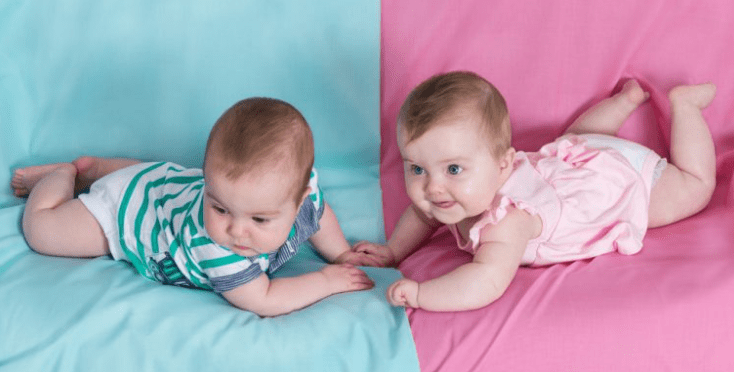
How early in your life do you think you began to be socialised? If you look up the dictionary definition of socialisation you’ll see it’s “the process of learning to behave in a way that is acceptable to society.” In some respects, this is an important lesson in survival. In its most basic form, socialisation is a way to pass on knowledge needed to fit in to a group. Fitting in is required when it comes to the tribal groups that early humans formed. Certain behaviours and conventions needed to be observed to remain part of the group and subject to its protections. Some socialisation is practical – don’t go into the swamp alone, stay quiet at night, and some are constructions – like wearing a certain pelt, jewellery or body paint. I am over simplifying of course, but I want to make the distinction between necessary survival socialisation and those we’ve created over the years, that are based on things as spurious and fleeting as fashion, and political zeitgeist.
I’m particularly interested in gender socialisation, not least of all because my very close friend has just welcomed her daughter into world, but also because I have never forgotten the rude awakening I had in a GCSE Sociology class when examining gender status. I’d been given a bad photocopy of a research paper to read in class, and it delved into the behaviour of parents around their children, when they were given toys specifically considered male or female. In short, parents were more likely to remove female-gendered toys from their sons, than they were to remove male-gendered toys from their daughters. This was when their children, all under 12 months old, had been given free reign to play with a selection of toys, with a mix of those considered male and female. For example, plastic toolkits for boys, pink dolls and household items for the girls, had been laid out, and the children could play with anything they wanted in the course of observation. Having observed this parental behaviour, the sociologists concluded that male toys were considered higher status than female, and so a girl playing with a “boys” toy was elevating her social status, but a boy playing with a “girls” toy was degrading his. What’s even sadder is that they were being taught this by their own parents as they learned which toys they were allowed to keep and which were taken away from them.
Stroll into any high-street clothes shop, or the clothing section of a supermarket and if I gave you some chalk and asked you to draw a line between the girls section and the boys section, you’d have absolutely no problem. Squeezing between a rack of blue and green dinosaur and superhero sweatshirts, and against the glittery, pink skirts and princess themed dresses, you’d be able to chalk a confident line between the two. Even the branding is at it, NASA on the boys t-shirts, girls tops proclaiming they want to be a mermaid and ride a unicorn. It’s science versus creativity and it’s woven into the fabric of these stores. Let’s all remember that it is parents that buy the clothes, who want their children to fit in, and conform to societal norms, and who gently steer their progeny to the acceptable clothing options, or buy them the “right” colours and themes without their input. But (sadly for me) children aren’t banned from shops, so they see this too, every time they are taken grocery shopping, or into the local shops. I’m old enough to remember the Argos catalogue (if you’re not from the UK, Argos is a warehouse style store, where you buy from a catalogue and some warehouse employee slides it down a conveyor belt for you to pick up from the store front) and you could look at the closed booklet and be able to pick out the section for boys toys and girls toys – so blue and pink were the edges of the pages.
I resisted a lot of the gendered toys as a young girl, and had asked for a chemistry set one Christmas, that my Mum begrudgingly bought for me. She begrudged my access to acid, not the masculine request I’d made. I had the set on a shelf by my bed over the years and always used to stare angrily at the boys on the box, wearing goggles and making weird, smoking test tubes of gunk. Even the packaging propped up the subliminal messaging that science is for men.
I already see my friend’s baby in pink onesies, she’s been sensible enough to gather as much second-hand baby paraphernalia as she could, so she’s got a lot of clothing from other parents and I’m not blaming her or criticising her. When I asked how old you think you were when you first began to be socialised, It was the second you emerged into the world, by the clothes you were dressed in, if you were called beautiful or big and strong. If anyone commented on what you might grow up to be, or bought you toys designed for your gender, and took away anything you touched that didn’t fit that image, then you were already being moulded. You can see it in children’s programmes, which of the parents is shown working, what characters wear and what traits are praised in little boys and girls. It starts so early on, I worry sometimes it can never be unpicked. Something as innocent as the toys you are allowed to play with, can shape the career you feel you can go into, or the clothing you wear as an adult.
I can see baby steps (pun intended) being made towards the deconstruction of these strange and restrictive societal norms, but I think we are many, many generations away from undoing them in any meaningful way. I think it’s important to recognise them in the first place, and how they are stitched into the fabric of the world we live in, and to make conscious choices to avoid perpetuating them.
 What's Love Goth to do with it?